
Functional medicine is different from conventional symptom-focused care because it looks deeper into why symptoms are happening. Instead of treating one complaint in isolation, functional medicine evaluates the connections between hormones, metabolism, gut health, inflammation, nutrition, stress, sleep, lifestyle, and long-term wellness. If you are considering Functional Medicine Programs in Atlanta, learning how progress is tracked can help you stay motivated and understand whether your care plan is working.
Progress in functional medicine is not always measured by one number on a scale or one lab result. Many patients begin care because they feel tired, inflamed, stressed, foggy, hormonally off, or frustrated with weight changes. These concerns often build over time, so improvement may also happen gradually. Tracking progress gives you and your provider a clearer picture of what is improving, what needs adjustment, and which next steps will support better results.
At BetterLiving MD, the goal of functional medicine is to help patients understand their body more clearly and move toward better energy, balance, resilience, and quality of life.
What Does Progress Mean in Functional Medicine?
Progress means more than simply “feeling better,” although that is an important part of the process. In functional medicine, progress may include changes in symptoms, lab markers, sleep quality, energy, digestion, mood, weight, inflammation, exercise tolerance, hormone balance, and daily habits.
A patient may notice that they wake up with more energy, experience fewer cravings, sleep more consistently, recover faster after exercise, feel less bloated, or manage stress better. These are meaningful signs that the body may be responding to care.
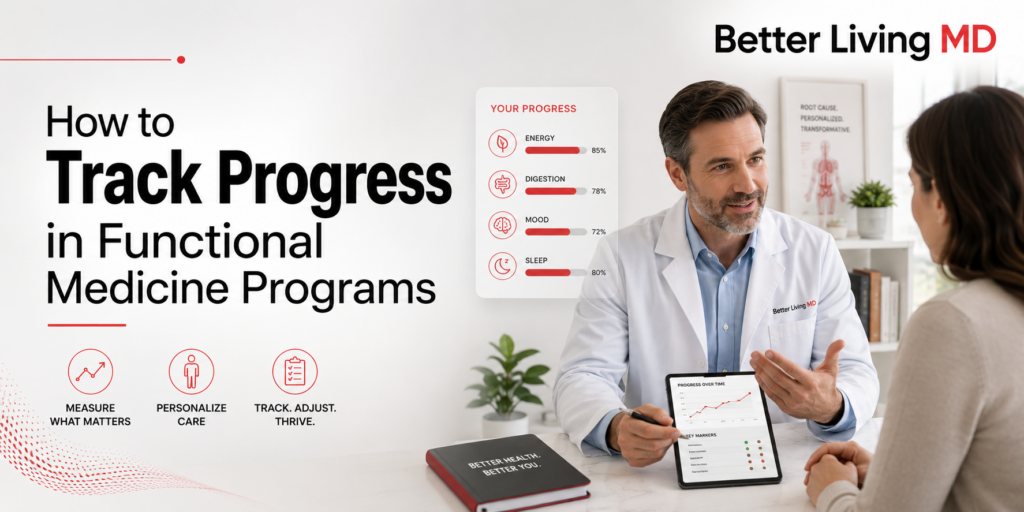
Functional medicine progress is usually tracked across three areas:
- Subjective progress: how you feel day to day
- Objective progress: lab results, measurements, and clinical markers
- Behavioral progress: nutrition, sleep, movement, stress habits, and consistency
When all three are reviewed together, your provider can make more informed decisions about your treatment plan.
Why Tracking Progress Matters
Functional medicine programs are personalized. That means the care plan may change based on your response. Tracking progress helps avoid guesswork and allows your provider to adjust recommendations based on real information.
Progress tracking can help answer important questions:
- Are your symptoms improving?
- Are your labs moving in the right direction?
- Are your energy and sleep improving?
- Is inflammation decreasing?
- Are nutrition and lifestyle changes sustainable?
- Are supplements, therapies, or medications helping?
- Does the plan need to be adjusted?
Without tracking, it can be difficult to know whether a program is working. With tracking, you can see patterns, celebrate small wins, and identify barriers before they become bigger setbacks.
- Start With a Baseline Assessment
Before progress can be measured, you need a starting point. A baseline assessment helps document where you are before beginning a functional medicine program.
This may include:
- Current symptoms
- Medical history
- Medication and supplement use
- Lifestyle habits
- Sleep patterns
- Stress levels
- Diet and hydration
- Exercise routine
- Weight and body composition goals
- Lab testing when appropriate
A baseline helps your provider understand your overall health picture. It also gives you something to compare against later. For example, if fatigue is one of your main concerns, rating your energy before starting care can help you notice gradual improvement over time.
- Track Symptoms Weekly
Symptom tracking is one of the most useful tools in functional medicine. Many symptoms fluctuate based on food, sleep, stress, hormones, activity, and environment. A weekly log can reveal patterns that may not be obvious day to day.
Common symptoms to track include:
- Fatigue
- Brain fog
- Bloating
- Constipation or diarrhea
- Headaches
- Joint or muscle discomfort
- Skin changes
- Mood swings
- Anxiety or irritability
- Sleep problems
- Cravings
- Hot flashes or night sweats
- Low libido
- Menstrual changes
- Weight changes
A simple 1–10 scale works well. For example, rate fatigue from 1 to 10 each week. You can also add short notes about possible triggers, such as poor sleep, high stress, certain foods, travel, or missed meals.
- Monitor Energy and Daily Performance
Energy is one of the most common reasons people seek functional medicine care. But energy is not just about feeling awake. It is connected to hormones, thyroid function, blood sugar, sleep quality, nutrient levels, inflammation, and stress response.
Helpful energy markers include:
- How easily you wake up
- Afternoon energy crashes
- Need for caffeine
- Workout performance
- Ability to focus
- Motivation
- Recovery after activity
- Evening energy stability
If you start needing less caffeine, recovering faster, or staying productive longer, those may be signs of progress.
- Measure Sleep Quality
Sleep is a major driver of hormone balance, immune health, weight management, mood, and cellular repair. Poor sleep can slow progress even when nutrition and treatment are on track.
Track sleep by noting:
- Bedtime and wake time
- Time needed to fall asleep
- Number of nighttime awakenings
- Sleep quality rating
- Morning refreshment
- Snoring or breathing issues
- Screen use before bed
- Alcohol or late meals
- Stress before sleep
Wearable devices can be helpful, but they are not required. Your own sleep experience matters. If you are falling asleep faster, waking less often, and feeling more restored, that is meaningful progress.
- Review Nutrition Consistency
Functional medicine does not rely on one universal diet. Nutrition recommendations should be based on your health needs, symptoms, labs, and goals. Some patients may focus on blood sugar balance, while others may need gut support, anti-inflammatory foods, protein intake, or elimination of trigger foods.
Track nutrition by asking:
- Did I eat enough protein today?
- Did I include vegetables or fiber?
- Did I stay hydrated?
- Did I skip meals?
- Did certain foods trigger symptoms?
- Did cravings improve?
- Did I feel steady energy after meals?
Food tracking does not need to become stressful. The purpose is not perfection. It is to identify patterns and support better decisions.
- Track Digestion and Gut Health
Gut health is often central to functional medicine because digestion can affect nutrient absorption, immune balance, inflammation, mood, and energy. Even if your main concern is not digestive, gut function may still matter.
Important gut markers include:
- Bloating
- Gas
- Reflux
- Nausea
- Constipation
- Diarrhea
- Stool consistency
- Food reactions
- Abdominal discomfort
- Appetite changes
If bloating decreases, bowel movements become more regular, or food tolerance improves, those can be strong signs that your program is moving in the right direction.
- Monitor Weight and Body Composition Carefully
Many patients want to track weight, but weight alone does not tell the full story. Functional medicine looks at metabolism, hormones, inflammation, muscle mass, blood sugar, stress, and sleep. These factors can all influence body composition.
Useful measures may include:
- Weight trends
- Waist circumference
- Body composition when available
- Strength changes
- Clothing fit
- Water retention
- Cravings
- Hunger levels
- Energy during exercise
Daily scale changes can be misleading because hydration, hormones, sodium, digestion, and stress can affect weight. Weekly or biweekly trends are often more helpful than daily fluctuations.
- Use Lab Testing to Measure Internal Progress
Lab testing can provide objective insight into what is happening inside the body. Depending on your symptoms and goals, your provider may recommend testing related to hormones, thyroid function, blood sugar, inflammation, nutrient status, liver function, cholesterol, or other markers.
Lab testing may help evaluate:
- Thyroid health
- Blood sugar and insulin function
- Vitamin D and B12 levels
- Iron status
- Inflammatory markers
- Hormone levels
- Lipid profile
- Liver and kidney function
- Metabolic health
- Gut-related concerns when appropriate
Labs should always be interpreted in context. A number may be “normal” but not optimal for how you feel. Functional medicine often looks at patterns across multiple markers rather than relying on one isolated result.
- Track Stress and Emotional Resilience
Stress can influence cortisol, digestion, blood sugar, sleep, cravings, inflammation, and hormone balance. If stress remains high, progress may be slower.
Track stress by noting:
- Daily stress level
- Main stress triggers
- Emotional resilience
- Anxiety or irritability
- Ability to relax
- Breathing or mindfulness habits
- Workload changes
- Social support
- Recovery time after stressful events
Progress may look like feeling calmer, responding better to challenges, sleeping more deeply, or having fewer stress-related cravings.
- Evaluate Movement and Recovery
Exercise supports metabolism, muscle strength, hormone balance, cardiovascular health, mood, and longevity. However, too much exercise without recovery can increase stress and slow healing.
Track movement by reviewing:
- Number of active days
- Strength training consistency
- Walking or daily steps
- Mobility work
- Workout recovery
- Muscle soreness
- Joint discomfort
- Exercise motivation
- Performance improvements
A good functional medicine plan should support movement that matches your current health status. For some patients, progress means increasing activity. For others, progress means recovering better and avoiding overtraining.
- Watch for Small Wins
Small wins are important because they often appear before major changes. Patients may overlook early signs of progress if they focus only on the biggest goal.
Small wins may include:
- Less bloating after meals
- Fewer afternoon crashes
- Better mood stability
- Reduced sugar cravings
- More restful sleep
- Clearer thinking
- Better skin
- Improved digestion
- More consistent workouts
- Less joint stiffness
- Improved confidence
These improvements show that the body may be responding positively, even if larger goals take more time.
- Know When the Plan Needs Adjustment
Tracking progress is not only about proving that a plan works. It is also about knowing when the plan needs to change. If symptoms are not improving, labs are unchanged, or the plan feels unsustainable, your provider may adjust your recommendations.
Adjustments may include:
- Changing supplement dosage
- Modifying nutrition strategy
- Reviewing medication interactions
- Testing additional markers
- Addressing sleep or stress more directly
- Changing exercise intensity
- Evaluating hormones or thyroid function
- Reassessing gut health
- Updating treatment timelines
Functional medicine is a process. The best plans evolve as your body responds.
How Often Should You Track Progress?
The frequency depends on your goals and your provider’s recommendations. In general:
- Symptoms can be tracked weekly
- Sleep and energy can be reviewed daily or weekly
- Nutrition and digestion can be tracked daily at first, then as needed
- Weight trends can be reviewed weekly
- Lab testing may be repeated every few months when appropriate
- Program reviews may happen at scheduled follow-up visits
Tracking should be helpful, not overwhelming. The right system is one you can actually maintain.
BetterLiving MD’s Approach to Functional Medicine Progress
At BetterLiving MD, progress is evaluated through a personalized and whole-body lens. Rather than focusing on one symptom, we consider how multiple systems are working together. Your provider may review your symptoms, labs, lifestyle habits, treatment response, and long-term goals to guide your next steps.
For patients seeking Functional Medicine Programs in Atlanta, the objective is to create a care plan that is measurable, realistic, and aligned with your body’s needs. Whether your goals include better energy, hormone balance, improved metabolism, reduced inflammation, gut support, or overall wellness, tracking helps make the process clearer and more effective.
Take the Next Step
Functional medicine progress is not always instant, but it should be measurable. By tracking symptoms, labs, energy, sleep, nutrition, digestion, stress, and daily habits, you can better understand how your body is responding and where your plan may need refinement.
If you are ready to take a deeper look at your health and explore a personalized approach, BetterLiving MD can help. Call us for Consultation to learn more about functional medicine care and how to begin tracking meaningful progress toward better wellness.
Frequently Asked Questions
- How do you track progress in functional medicine?
Progress in functional medicine is tracked through symptoms, lab results, energy, sleep, digestion, mood, weight trends, stress levels, nutrition consistency, and lifestyle habits. A provider reviews these areas together to determine whether the care plan is working or needs adjustment.
- What should I track during a functional medicine program?
You should track symptoms, sleep quality, energy levels, digestion, food reactions, stress, exercise recovery, weight trends, mood, cravings, and lab results when recommended. These markers help identify patterns and measure improvement over time.
- How long does it take to see results from functional medicine?
Some patients notice small improvements within a few weeks, such as better sleep, less bloating, or improved energy. Deeper changes involving hormones, metabolism, inflammation, or gut health may take several months. Results depend on your health history, consistency, and treatment plan.
- Are lab tests important in functional medicine?
Yes. Lab tests can help identify imbalances related to thyroid function, hormones, blood sugar, inflammation, nutrient levels, metabolic health, and other concerns. Functional medicine uses labs along with symptoms and lifestyle information to create a more complete picture.
- Can functional medicine help if my standard labs are normal?
Yes. Some patients feel unwell even when standard labs are within the normal range. Functional medicine looks at patterns, symptoms, lifestyle factors, and optimal function rather than relying only on basic lab ranges.
- How often should I repeat lab testing?
Lab testing frequency depends on your symptoms, goals, and provider recommendations. Some labs may be repeated after a few months to evaluate progress, while others may be checked less often. Your provider will guide the timing based on your plan.
- What are signs that a functional medicine program is working?
Signs may include better energy, improved sleep, fewer cravings, better digestion, reduced bloating, improved mood, clearer thinking, better exercise recovery, healthier weight trends, and improved lab markers.
- Why is symptom tracking important?
Symptom tracking helps reveal patterns between how you feel and factors such as food, stress, sleep, hormones, activity, and supplements. This information helps your provider make better decisions about your care plan.
- Can I track functional medicine progress at home?
Yes. You can track symptoms, sleep, energy, digestion, food intake, stress, movement, and weight trends at home. Lab results and clinical markers should be reviewed with a provider for proper interpretation.
- Does BetterLiving MD offer Functional Medicine Programs in Atlanta?
Yes. BetterLiving MD provides personalized functional medicine and wellness-focused care designed to evaluate root causes, support whole-body health, and track meaningful progress. Call us for Consultation to learn more about your options.