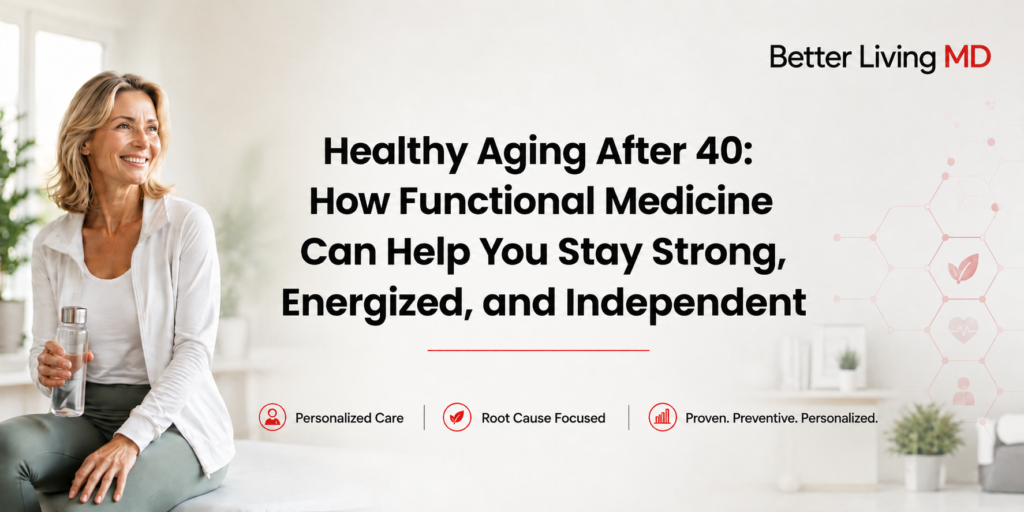
Turning 40 Doesn’t Mean Accepting Feeling Older
Maybe your weight is harder to manage than it used to be. Maybe you don’t recover from exercise as quickly.
Your sleep may be different. Your energy may be lower. You may notice changes in muscle strength, hormones, sexual health, concentration, or how your body handles stress.
These changes can be frustrating—but they do not necessarily mean you should simply accept feeling worse because you’re getting older.
At the same time, not every change after 40 is a hormone problem that needs treatment.
Healthy aging is about understanding what is actually changing and identifying the factors you can realistically improve.
At BetterLiving MD, our approach to healthy aging looks beyond appearance alone. We consider factors that influence your ability to remain:
- Strong
- Metabolically healthy
- Mentally sharp
- Physically active
- Well-rested
- Independent
- Engaged in the life you want to live
For patients in the Atlanta area, and eligible patients receiving virtual care where available, a personalized healthy-aging evaluation can help identify current health risks, persistent symptoms, and opportunities to improve long-term health.
If you’re over 40 and don’t feel like yourself—or simply want to be proactive about your health—schedule a healthy-aging consultation with BetterLiving MD.
What Does Healthy Aging Actually Mean?
“Anti-aging” is often associated with looking younger.
But medically, a more meaningful goal is healthspan.
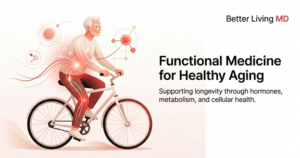
Healthspan refers to the years of life during which you remain healthy, functional, active, and independent.
That means successful aging is not simply measured by a number on a scale or how young someone appears.
It may be reflected in:
- Maintaining muscle and strength
- Preserving mobility and balance
- Healthy blood pressure
- Healthy blood sugar
- Appropriate cholesterol levels
- Restorative sleep
- Cardiovascular fitness
- Cognitive health
- Emotional well-being
- Healthy body composition
- Sexual health
- Independence
- Quality of life
No medical treatment can stop aging.
But many of the factors that influence how well you age can be addressed.
Why Does Health Often Feel Different After 40?
There is no biological switch that suddenly flips on your 40th birthday.
However, midlife is often when gradual changes become easier to notice.
You may experience:
- Slower recovery after exercise
- Easier weight gain
- Difficulty losing weight
- Reduced muscle strength
- Changes in body composition
- Lower energy
- Changes in sleep
- Menstrual changes
- Perimenopause or menopause symptoms
- Changes in libido or sexual function
- Increasing blood pressure
- Changes in blood sugar
- Greater effects from chronic stress
- Difficulty maintaining routines that used to work
Hormonal systems also change throughout adulthood.
But these symptoms do not automatically mean hormones are the problem.
For example, fatigue might be influenced by:
- Poor sleep
- Sleep apnea
- Anemia
- Thyroid disease
- Stress
- Depression
- Medications
- Metabolic dysfunction
- Nutrient deficiency
- Hormonal changes
- Another medical condition
The goal is not to label every symptom as “aging.”
And it is not to automatically label every symptom as a hormone deficiency.
The goal is to determine what is actually happening.
What Does Functional Medicine Look at After Age 40?
Traditional medical visits may understandably focus on one immediate complaint.
Functional medicine takes a broader view when several factors appear to be interacting.
At BetterLiving MD, that may mean considering relationships among:
- Metabolic health
- Hormonal health
- Sleep
- Nutrition
- Digestion
- Physical activity
- Muscle mass and strength
- Stress
- Lifestyle
- Cardiovascular risk
- Medications
- Preventive health needs
An individualized evaluation may include discussion of:
- Personal medical history
- Family medical history
- Current symptoms
- Blood pressure
- Blood sugar
- Cholesterol
- Cardiovascular risk
- Hormonal symptoms
- Sleep quality
- Physical activity
- Strength
- Body composition
- Nutrition
- Alcohol use
- Tobacco use
- Stress
- Emotional health
- Medications
- Supplements
- Preventive screenings
The objective is not to order every available laboratory test because someone has turned 40.
Testing should have a reason.
The goal is to identify clinically meaningful risks and symptoms that can actually guide care.
Why Metabolic Health Matters More After 40
Metabolic health becomes increasingly important throughout midlife. Factors such as:
- Blood pressure
- Blood sugar
- Insulin resistance
- Cholesterol
- Body composition
- Abdominal fat
- Physical activity
- Sleep
- Muscle mass
can all influence long-term cardiovascular and metabolic health.
A personalized healthy-aging plan may therefore focus on:
- Improving food quality
- Maintaining or building muscle
- Increasing daily movement
- Managing weight when medically appropriate
- Improving sleep
- Reducing excessive alcohol intake
- Managing blood pressure
- Addressing abnormal blood sugar
- Addressing cholesterol and cardiovascular risk
The objective is not simply to make every laboratory number look “optimal.”
It is to identify meaningful risk factors before they become bigger health problems.
Why Muscle May Be One of Your Most Important Anti-Aging Assets
Healthy aging is not just about losing weight.
Maintaining muscle matters.
Strength and muscle help support:
- Mobility
- Balance
- Bone health
- Physical function
- Metabolic health
- Exercise capacity
- Independence
This becomes increasingly important as we age.
A person who focuses only on losing pounds without protecting muscle may be overlooking one of the most important components of long-term physical health.
That is why resistance exercise deserves a central role in a healthy-aging plan. Depending on your health status and experience level, strength training might involve:
- Free weights
- Resistance machines
- Resistance bands
- Body-weight exercise
- Professionally supervised rehabilitation or strength work
You do not need to train like you did at 25.
The better question is:
What physical capacity do you want to have at 60, 70, and beyond?
Then build toward protecting it.
What Happens to Body Composition After 40?
Many people become frustrated because their body no longer seems to respond the way it did when they were younger.
Several factors may contribute. These can include:
- Changes in activity
- Loss of muscle
- Sleep disruption
- Hormonal changes
- Metabolic health
- Stress
- Changes in appetite
- Medications
- Nutrition
- Reduced daily movement
This is why simply telling someone to “eat less and exercise more” may not address the complete picture. Weight is important when it affects health.
But body composition, muscle, physical function, blood pressure, glucose regulation, and cardiovascular risk may be equally important—or more important—than the number on the scale alone.
How Should Nutrition Change After 40?
There is no single “anti-aging diet.”
And most people do not need an extreme diet to age well.
A sustainable eating pattern should generally provide adequate:
- Protein
- Fiber
- Vegetables
- Fruit
- Healthy fats
- Vitamins
- Minerals
- Minimally processed foods
Depending on the individual, nutrition priorities may include:
- Increasing protein intake
- Eating more vegetables and fruits
- Choosing higher-fiber carbohydrates
- Including healthy fats
- Managing total calorie intake
- Limiting highly processed foods
- Reducing excessive sodium when appropriate
- Reducing excessive alcohol
- Correcting medically confirmed nutrient deficiencies
For many adults over 40, adequate protein becomes especially important because maintaining muscle is a major healthy-aging priority.
Nutrition recommendations should also account for:
- Metabolic health
- Medications
- Activity level
- Digestive symptoms
- Medical conditions
- Individual preferences
- Long-term sustainability
The best nutrition plan is not necessarily the most restrictive one.
It is the one that supports your health and can realistically become part of your life.
Does Sleep Affect How Well You Age?
Absolutely.
Sleep influences:
- Metabolic health
- Blood sugar regulation
- Cardiovascular health
- Mood
- Memory
- Concentration
- Appetite
- Exercise recovery
- Stress resilience
Poor sleep becomes particularly relevant after 40 because several conditions can begin interfering with sleep during midlife.
Possible causes include:
- Chronic stress
- Perimenopause
- Menopause-related hot flashes
- Sleep apnea
- Alcohol
- Medication effects
- Chronic pain
- Irregular schedules
- Insomnia
- Other medical conditions
Someone who spends eight hours in bed but wakes repeatedly may not be getting restorative sleep.
Likewise, someone who consistently sleeps only five hours may become accustomed to feeling tired without realizing how much sleep deprivation is affecting other areas of health.
Don’t Assume You Just “Need a Sleep Supplement”
Persistent sleep problems deserve a closer look. If you:
- Snore loudly
- Wake gasping or choking
- Have morning headaches
- Experience severe daytime sleepiness
- Wake repeatedly
- Remain exhausted despite spending enough time in bed
a sleep disorder such as obstructive sleep apnea may need to be evaluated. Adding a supplement will not correct an untreated breathing disorder.
This is another example of why healthy-aging medicine should focus on identifying the cause of a symptom
rather than simply trying to suppress it.
What Role Do Hormones Play After 40?
Hormonal changes can absolutely influence quality of life.
However, hormone therapy is not a universal anti-aging treatment.
Treatment should be used when there is a medically appropriate reason.
Hormonal Changes in Women After 40
Women may begin experiencing perimenopausal symptoms years before menopause.
Possible changes include:
- Hot flashes
- Night sweats
- Sleep disruption
- Menstrual changes
- Vaginal symptoms
- Sexual changes
- Mood changes
- Fatigue
- Changes in body composition
For appropriately selected patients, hormone therapy may be one treatment option.
However, decisions should consider:
- Symptoms
- Age
- Medical history
- Personal risk factors
- Treatment goals
- Potential benefits
- Potential risks
- Type of therapy
- Route of administration
Hormone treatment should be personalized—not prescribed simply because a patient has reached a certain age.
Hormonal Changes in Men After 40
Men may notice:
- Lower energy
- Changes in libido
- Fewer spontaneous erections
- Changes in sexual function
- Reduced strength
- Changes in body composition
- Poorer exercise recovery
These symptoms may occur with testosterone deficiency. But they can also result from:
- Poor sleep
- Obstructive sleep apnea
- Obesity
- Diabetes
- Thyroid disease
- Chronic stress
- Depression
- Medications
- Other medical conditions
That is why a man should not be diagnosed with “low T” based on symptoms alone.
Hormone treatment should follow an appropriate medical evaluation.
Should Everyone Over 40 Have Their Hormones Tested?
No.
Turning 40 by itself is not an indication for broad hormone testing. Hormone evaluation should be based on:
- Symptoms
- Medical history
- Age
- Sex
- The condition being investigated
- Relevant risk factors
Testing should answer a clinical question.
It should not simply create a long list of numbers to “optimize.”
Can Hormone Therapy Be Part of a Healthy-Aging Plan?
Yes—when it is medically appropriate.
For example, hormone therapy may be considered for certain patients experiencing significant menopause symptoms or documented hormone deficiency.
But hormone therapy should not be promised as a way to:
- Stop aging
- Reverse aging
- Guarantee weight loss
- Prevent every age-related disease
- Make everyone feel younger
The safest approach is to identify the condition being treated, understand the expected benefit, review potential risks, and monitor whether treatment is actually helping.
What About “Bioidentical” Hormone Therapy?
The term “bioidentical” is frequently used in hormone therapy discussions.
Patients should focus less on marketing terminology and more on the actual treatment plan. Important questions include:
- Which hormone is being prescribed?
- Why is it being prescribed?
- What symptoms or condition are being treated?
- What dose is appropriate?
- What delivery method is being used?
- What benefits are expected?
- What risks apply to this individual?
- How will treatment be monitored?
Personalization should mean choosing treatment based on the patient’s medical needs—not simply using the same hormone protocol for everyone.
What Role Does Stress Play in Healthy Aging?
Stress is not only an emotional experience. Long-term stress can affect:
- Sleep
- Exercise consistency
- Eating patterns
- Relationships
- Mood
- Motivation
- Quality of life
Stress management therefore deserves a place in a comprehensive healthy-aging plan. Depending on the individual, that may include:
- Regular physical activity
- Relaxation strategies
- Mindfulness
- Breathing techniques
- Social connection
- Time outdoors
- Meaningful hobbies
- Therapy or counseling when appropriate
- Addressing depression or anxiety
- Improving sleep
The goal is not to eliminate all stress.
It is to improve the body’s ability to recover from it.
What About Brain Health After 40?
Healthy aging should protect the brain as deliberately as it protects the heart or muscles. Areas worth considering include:
- Physical activity
- Sleep
- Cardiovascular risk
- Blood pressure
- Blood sugar
- Social connection
- Stress
- Mental health
- Continued learning
- Meaningful activities
Someone who is focused only on appearance or weight may miss important parts of long-term health.
Healthy aging is physical, metabolic, cognitive, and emotional.
Preventive Care May Be One of the Best “Anti-Aging” Strategies
One of the most effective ways to protect long-term health is to identify established risks before they cause serious problems.
Preventive care should be individualized according to:
- Age
- Sex
- Family history
- Existing medical conditions
- Medications
- Lifestyle
- Personal risk
Areas that may deserve attention include:
- Blood pressure
- Cholesterol
- Cardiovascular risk
- Diabetes risk
- Breast health
- Cervical health
- Colorectal screening
- Bone health
- Mental health
- Immunizations
- Skin changes
- Tobacco use
- Alcohol use
Not everyone needs the same tests at the same age or frequency.
A personalized healthy-aging plan should help determine which preventive measures are appropriate for
you.
What We Look at at BetterLiving MD
A healthy-aging consultation should not begin with the assumption that you need hormones, supplements, injections, or medications.
It should begin with questions.
For example:
Why has your energy changed?
Why are you gaining weight more easily? Are you losing muscle?
Are you sleeping well?
Could sleep apnea be contributing?
Are hormonal changes relevant?
How is your metabolic health?
Are there cardiovascular risks that need attention?
Could medications be contributing to your symptoms?
Are your nutrition and exercise strategies appropriate for your current stage of life?
Are you up to date on preventive care?
At BetterLiving MD, the objective is to use symptoms, health history, lifestyle patterns, and appropriate medical testing to identify the factors most relevant to the individual patient.
Functional Medicine and Healthy Aging in Atlanta
Patients searching for functional medicine or anti-aging therapy in Atlanta may be looking for something more comprehensive than an annual checkup or a generic wellness program.
Maybe you feel relatively healthy but want to reduce future risk.
Maybe you are struggling with fatigue, body composition, sleep, or hormonal symptoms.
Maybe what worked in your 20s and 30s no longer seems to work.
Or maybe you simply want a clearer picture of what you should be doing now to protect the decades ahead.
BetterLiving MD takes a personalized approach to healthy aging that may consider:
- Metabolic health
- Hormonal health
- Strength
- Body composition
- Sleep
- Nutrition
- Cardiovascular risk
- Stress
- Preventive care
- Lifestyle
- Medical history
Patients in the Atlanta area can contact BetterLiving MD for a healthy-aging consultation.
Eligible patients outside Georgia may also have virtual-care options in states where our clinicians are licensed.
What Can You Start Doing Today?
You do not need to wait until something goes wrong to begin thinking about healthy aging. Start with the fundamentals.
1.Know Your Numbers
Understand your blood pressure and appropriate metabolic and cardiovascular markers.
2.Protect Your Muscle
Make resistance exercise part of your routine.
3.Keep Moving
Build regular aerobic activity and daily movement into your life.
4.Prioritize Protein and Food Quality
Support muscle and metabolic health with a sustainable eating pattern.
5.Protect Your Sleep
Do not normalize chronic exhaustion. Investigate persistent sleep problems.
6.Manage Stress
Build recovery, connection, and enjoyable activities into your routine.
7.Keep Up With Preventive Care
Screen for established health risks at appropriate ages and intervals.
8.Pay Attention to Persistent Symptoms
Fatigue, sexual changes, poor sleep, unexplained weight changes, and loss of strength should not automatically be dismissed as normal aging.
9.Focus on Function, Not Just Weight
Ask yourself how strong, mobile, energetic, and capable you want to be decades from now.
10.Choose Sustainable Changes
A realistic plan followed for years is usually more valuable than an extreme program followed for several weeks.
Frequently Asked Questions About Healthy Aging After 40
Is 40 Too Early to Think About Healthy Aging?
No.
Midlife can be an ideal time to review health risks while there is still significant opportunity to influence the decades ahead.
This may include evaluating:
- Blood pressure
- Metabolic health
- Physical strength
- Sleep
- Nutrition
- Cardiovascular risk
- Preventive screening
Healthy aging works best when it begins before significant loss of health or function occurs.
What Health Changes Are Common After 40?
Some adults notice changes in:
- Body composition
- Exercise recovery
- Muscle strength
- Sleep
- Energy
- Reproductive hormones
- Blood pressure
- Blood sugar
- Cardiovascular risk
However, persistent symptoms should be evaluated rather than automatically blamed on age.
Can Functional Medicine Slow Aging?
No treatment has been proven to stop aging.
Functional medicine may support healthier aging by identifying modifiable factors involving:
- Nutrition
- Activity
- Sleep
- Metabolic health
- Stress
- Preventive care
- Hormonal health when appropriate
The better goal is improving healthspan rather than trying to stop the aging process.
What Is the Best Exercise After 40?
There is no single best exercise.
A healthy program generally combines:
- Aerobic activity
- Strength training
- Mobility
- Regular daily movement
The best program is one that is appropriate for your health, fitness level, limitations, and long-term goals.
Is Strength Training Safe After 40?
For most adults, appropriately performed strength training can be an important part of healthy aging. The intensity and exercise selection should match your fitness level and medical circumstances.
People with significant medical conditions, pain, or previous injuries may benefit from professional guidance.
Should Everyone Over 40 Have Their Hormones Checked?
No.
Hormone testing should be based on symptoms and the clinical question being investigated.
Broad hormone panels are not automatically necessary just because someone has reached a certain age.
Can Hormone Therapy Be Part of an Anti-Aging Program?
Hormone therapy may be appropriate for medically evaluated conditions, including certain menopause symptoms or confirmed hormone deficiencies.
It should not be prescribed solely as a general strategy to prevent aging.
Can Better Sleep Help Me Age More Healthfully?
Yes.
Good-quality sleep supports:
- Physical health
- Cognitive health
- Emotional health
- Metabolic health
- Exercise recovery
Persistent insomnia, severe daytime sleepiness, loud snoring, or possible sleep apnea should be appropriately evaluated.
What Should I Eat After 40?
There is no single diet everyone should follow. A sustainable pattern emphasizing:
- Vegetables
- Fruit
- Fiber
- Quality protein
- Healthy fats
- Minimally processed foods can support long-term health.
Specific recommendations should account for metabolic health, medications, activity level, health conditions, and personal goals.
Is Weight Loss the Most Important Goal After 40?
Not necessarily.
Weight may matter, particularly when excess body fat is affecting health. However, other important goals include:
- Maintaining muscle
- Improving metabolic health
- Increasing fitness
- Improving sleep
- Managing cardiovascular risk
- Maintaining strength and independence
The scale should not be the only measure of success.
When Should I See a Doctor About Healthy Aging?
Consider an evaluation if you experience:
- Persistent fatigue
- Unexplained weight changes
- Loss of strength
- Poor sleep
- Hormonal symptoms
- Sexual changes
- Abnormal blood pressure
- Abnormal blood sugar
- Changes in exercise tolerance
- Or simply want to assess health risks proactively
Don’t Try to Stop Aging. Change How You Age.
You cannot stop the clock.
But you can influence many of the factors that determine how strong, healthy, energetic, and independent you remain as time passes.
Healthy aging after 40 means protecting:
- Muscle
- Metabolic health
- Cardiovascular health
- Sleep
- Cognitive health
- Emotional well-being
- Physical function
- Independence
At BetterLiving MD, we take a personalized approach that considers your symptoms, lifestyle, health history, metabolic and hormonal health, preventive needs, and long-term goals.
The objective isn’t to make you 25 again.
It’s to help you build the strongest, healthiest version of yourself for the decades ahead.
Schedule a Healthy-Aging Consultation With BetterLiving MD
If you’re over 40 and experiencing changes in energy, weight, sleep, strength, body composition, sexual health, or hormonal symptoms—or simply want to be more proactive about your future health—a personalized evaluation can help identify your next steps.
BetterLiving MD serves patients in the Atlanta area and may offer virtual care to eligible patients in other states where our clinicians are licensed.
Schedule your healthy-aging consultation with BetterLiving MD and start building a plan designed not simply to add years to your life—but to protect the quality of those years.